Sign up to get the Sloww Sunday newsletter via email for free:👇

Sloww Sunday Newsletter 219 (Jul 20, 2025) — Where I’ve Been, Psychology of Awakening, Spiritual Bypassing, & More
The Sloww Sunday newsletter sends to 10,000+ readers slowing down to the wisdom within. If you enjoy this issue, please help grow Sloww by forwarding this newsletter to others.
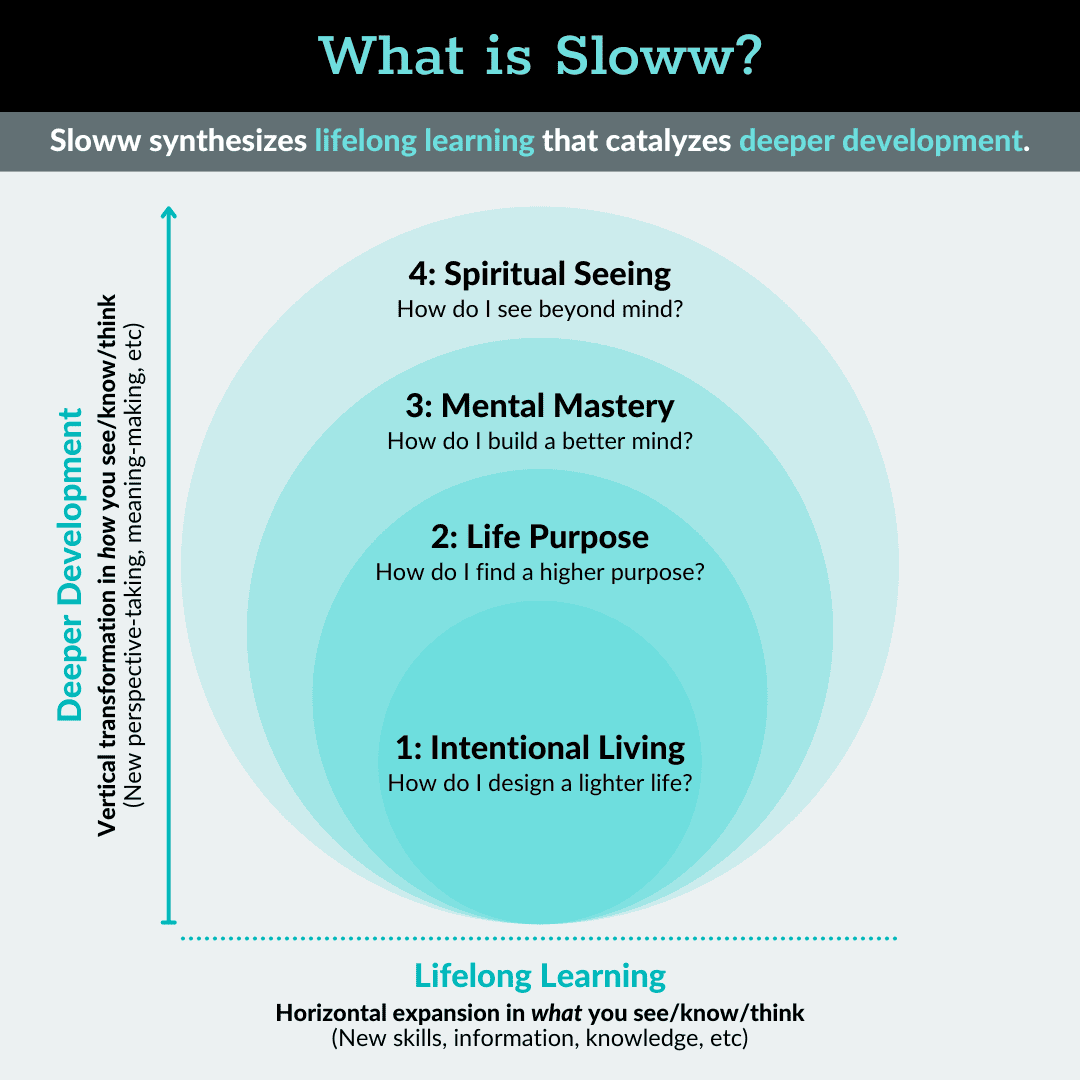
New to Sloww? Here’s what it’s about in a nutshell (which mirrors the newsletter sections below):
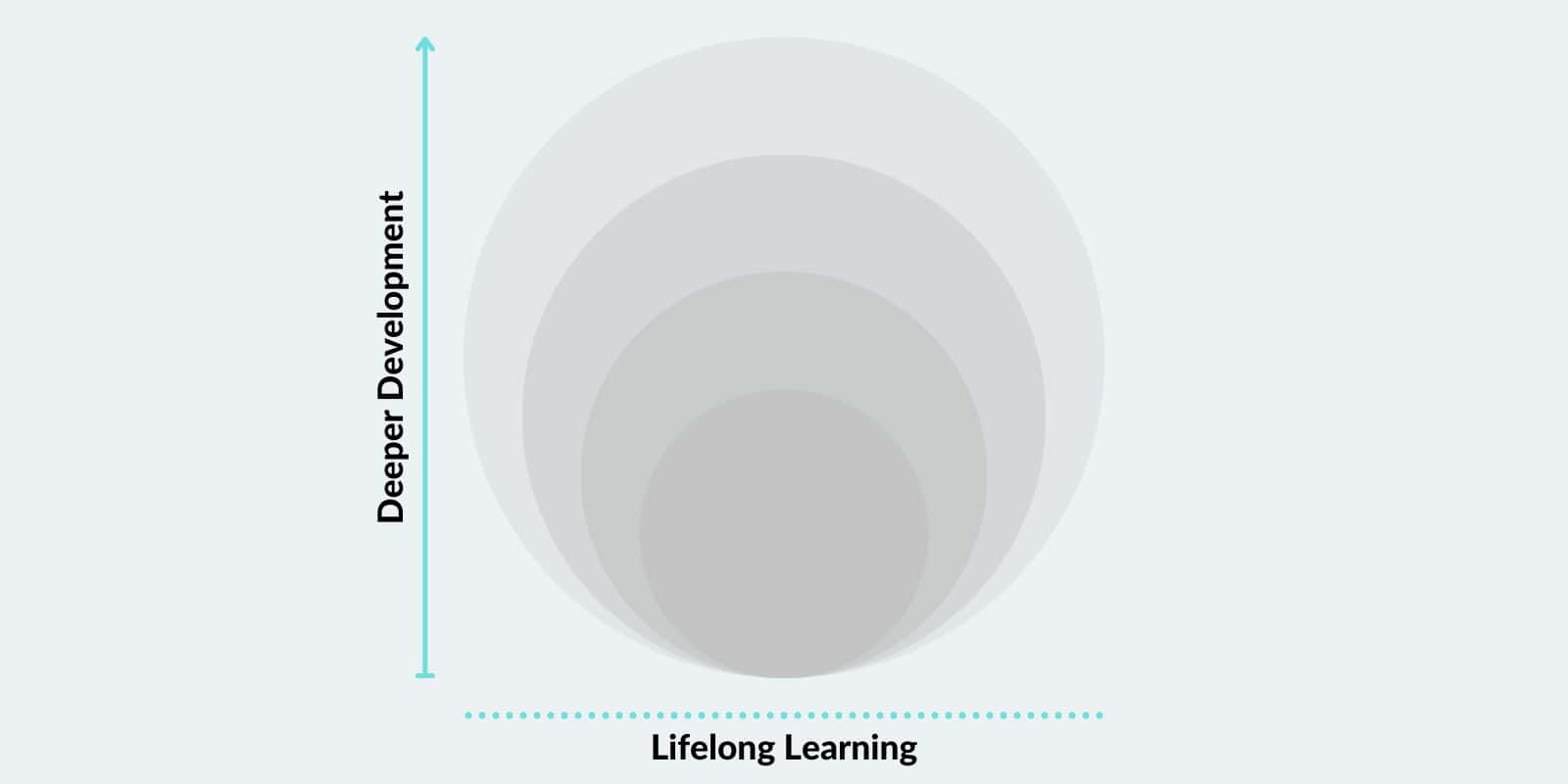
📚 Kegan’s theory of adult development featuring the subject-object relationship
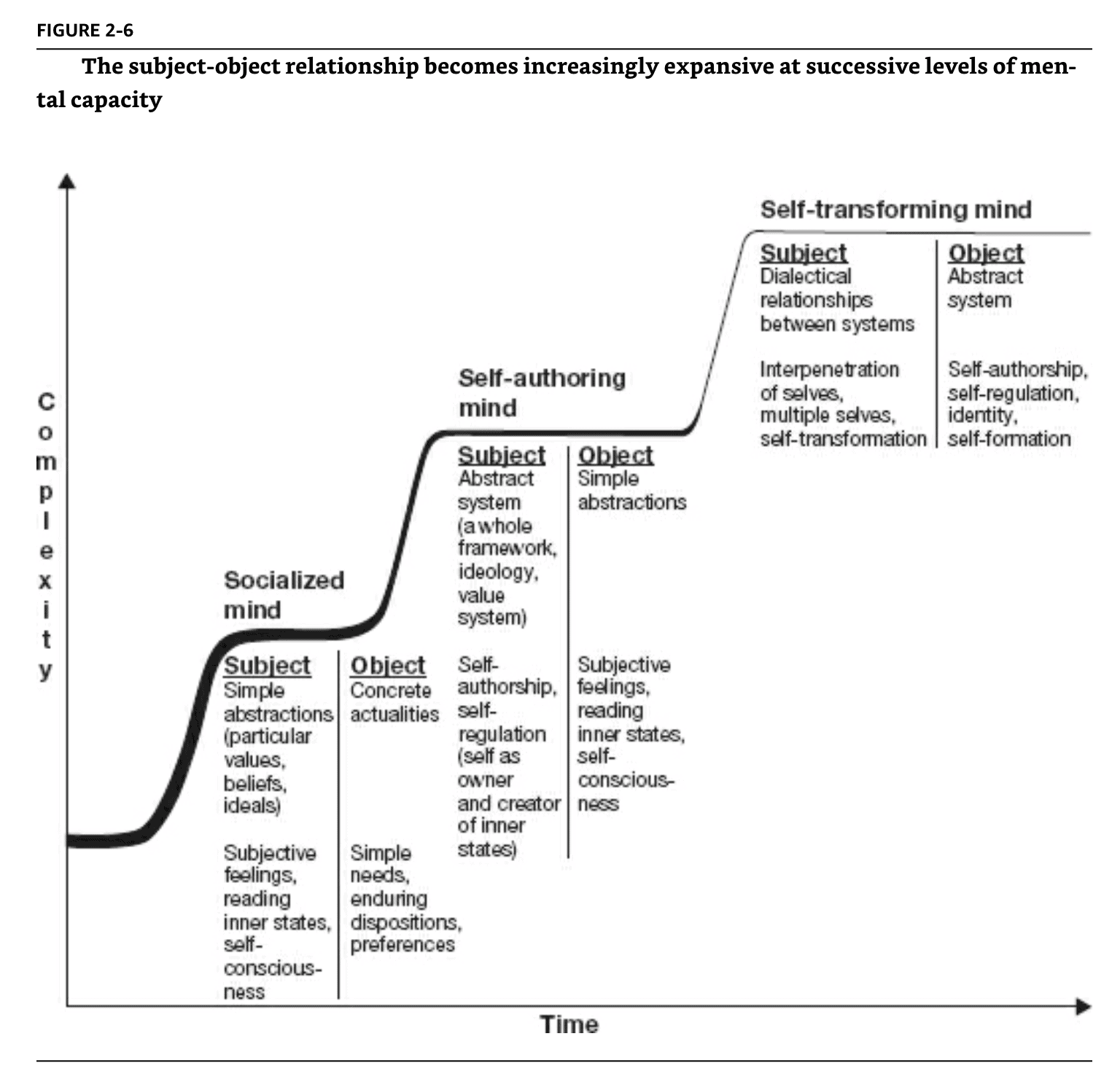
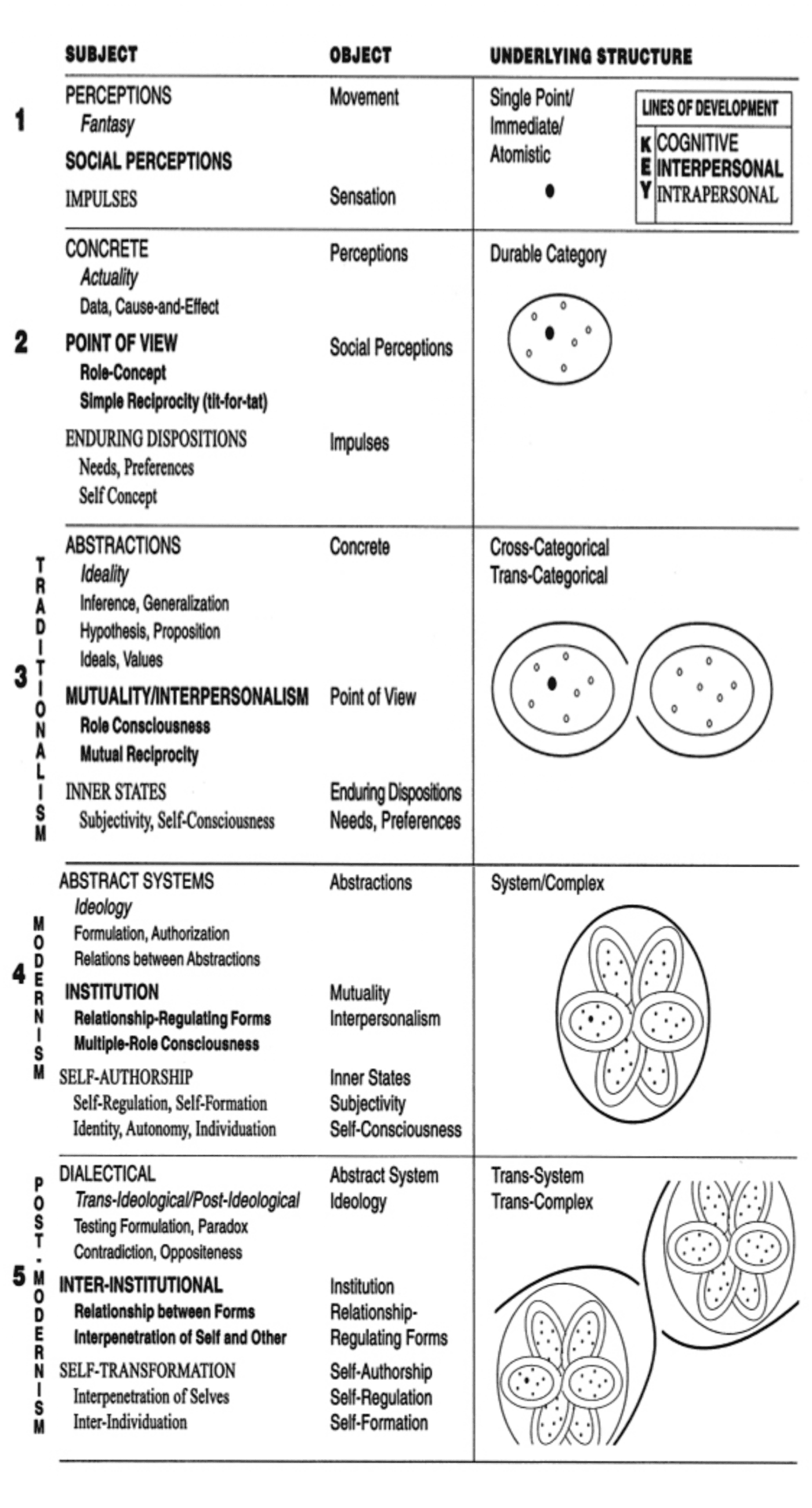
I finally knocked out two of Robert Kegan’s books: The Evolving Self & In Over Our Heads (and also skimmed two others: Immunity to Change & An Everyone Culture). Kegan’s theory of adult development is based on the developing subject-object relationship (🔒) which is one of the most important insights I’ve ever discovered:
- “The root of any way of knowing (what philosophers call an epistemology) is an abstract-sounding thing called the ‘subject-object relationship.’ Any way of knowing can be described with respect to that which it can look at (object) and that which it looks through (the ‘filter’ or ‘lens’ to which it is subject) … A way of knowing becomes more complex when it is able to look at what before it could only look through. In other words, our way of knowing becomes more complex when we create a bigger system that incorporates and expands on our previous system. This means that if we want to increase mental complexity, we need to move aspects of our meaning-making from subject to object, to alter our mindset so that a way of knowing or making meaning becomes a kind of ‘tool’ that we have (and can control or use) rather than something that has us (and therefore controls and uses us). Each of the levels of mental complexity incorporates a distinctly different subject-object relationship, a successively more complex way of knowing that is able to look at what the prior way of knowing could only look through.”
Here are a couple ways Kegan visualizes the developing subject-object relationship:
0️⃣ Explore More: 50+ posts on Lifelong Learning & Deeper Development (Sloww Stage Support)
🧠 Featured Product: Synthesizer Course: The Flagship Course for Synthesizing Minds
👧 How to teach awareness to kids
The highly popular book The Whole-Brain Child by Daniel J. Siegel & Tina Payne Bryson didn’t live up to the hype for me. But, it’s always a pleasant surprise when an underwhelming book delivers at least one new idea. In this case, it came in chapter 5 about the ‘wheel of awareness’. The concept is that our mind can be pictured as a bicycle wheel with a hub at the center and spokes radiating toward the outer rim. This can be a powerful metaphor especially for young kids:
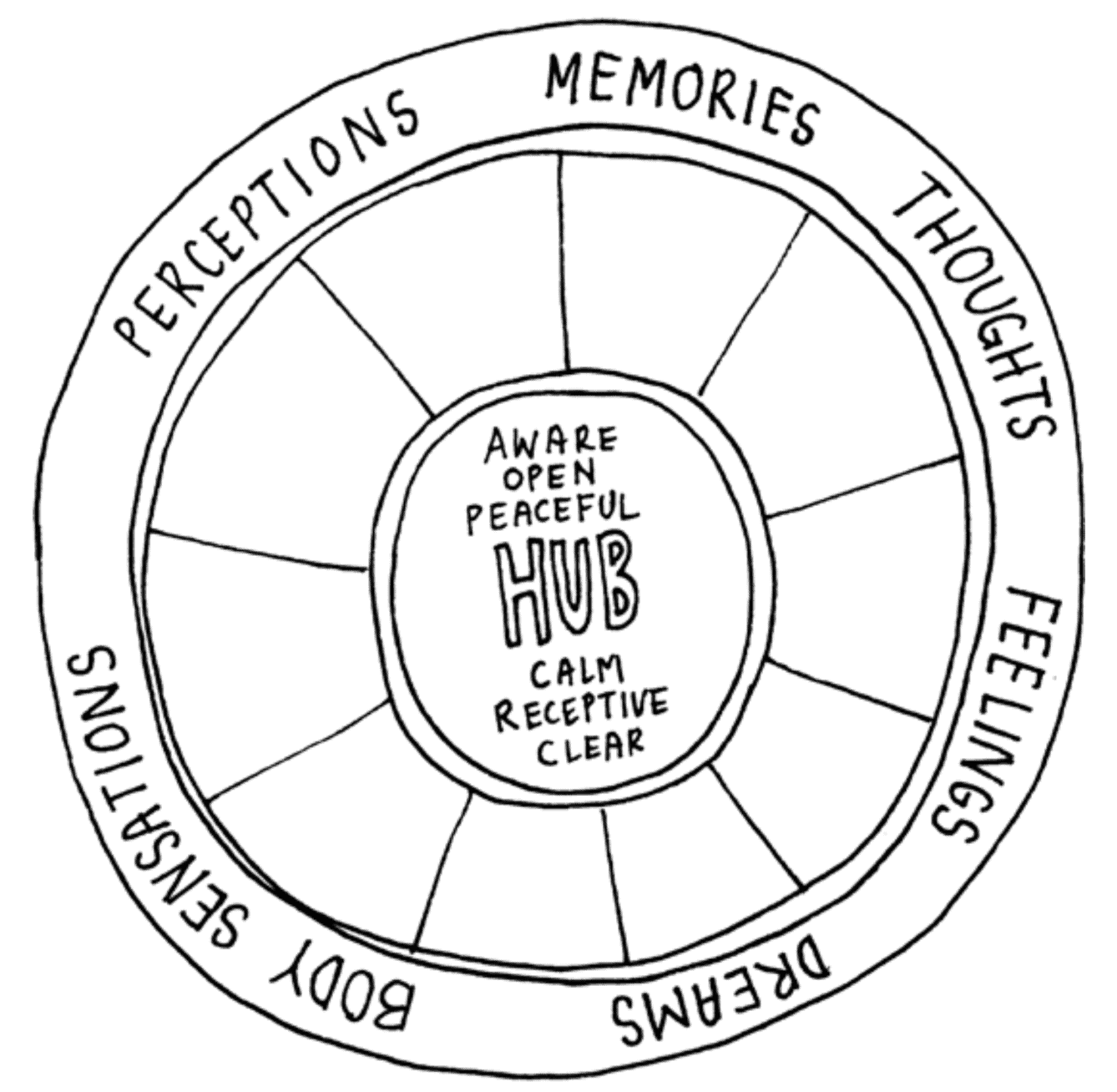
- The rim (anything we can pay attention to or become aware of): Our thoughts and feelings, our dreams and desires, our memories, our perceptions of the outside world, and the sensations from our body (all different aspects of ourself).
- The hub (the inner place from which we become aware of all that’s happening around and within us): Our awareness where we can focus on the various points on the rim of our wheel.
- Suffering = Being ‘stuck on the rim’ of the wheel of awareness rather than perceiving the world from the hub and integrating the many rim points. The danger is that a temporary state of mind can be perceived as a permanent trait of the self (confusing the difference between ‘I feel’ and ‘I am’).
“This is one of the best things the wheel of awareness does: it teaches kids that they have choices about what they focus on and where they place their attention. It gives them a tool that lets them integrate the different parts of themselves, so they aren’t held hostage by one negative constellation of feelings or thoughts clamoring for their attention.”
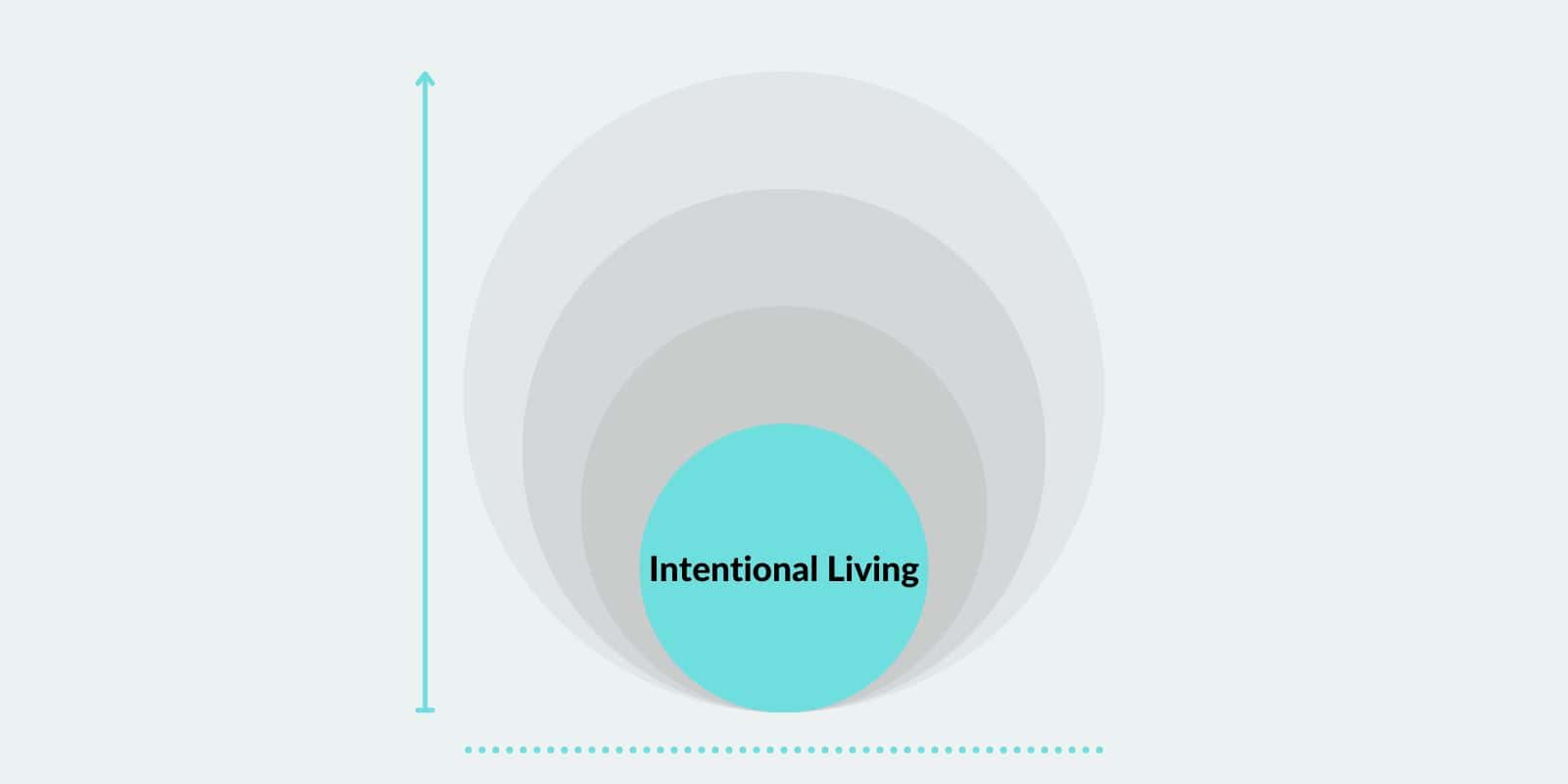
1️⃣ Explore More: 100+ posts on Intentional Living (Sloww Stage 1)
😃 Featured Product: The Hierarchy of Happiness: 100+ Powerful Perspectives on How to be Happy (Free eBook)
🧭 Where have I been the last few months?
In case you haven’t noticed, there have been some uncharacteristically long gaps between newsletters in recent months (maybe I should rename it from ‘Sloww Sunday’ to ‘Sloww Someday’). Why? What’s going on? Where to begin…
First of all, we had a daughter last year who recently turned 1 already! We were lucky enough to have a baby, but not lucky enough to have an ‘easy baby’—for more details, here’s what I wish I knew about birth and babies (🔒). I’d easily call this year the hardest year of my life, primarily due to the absolutely brutal sleep deprivation in the first few months (really, I’d take 100 existential crises over going through sleep deprivation again).
Fast forward to a few months ago, my wife started a new job which meant I officially became full-time daddy daycare (we live in a smaller town in New Mexico far from family and daycare options). If you’ve ever raised an infant solo, then you know it’s not possible to get anything else done during the day—and then you’re usually too exhausted to do anything at night. The only ‘work’ I’m able to do most days is reading books on my phone while my daughter contact naps on me (she’s still not a fan of her crib).
But, a big change is coming next month. My wife’s new job is remote and no longer requires us to be in New Mexico. After 15 years of living and working in Missouri, Kansas, California, and New Mexico, we are moving 1500 miles back to Ohio where we met (and where I was born and raised) to be closer to family and finally plant some roots.
More to come soon!
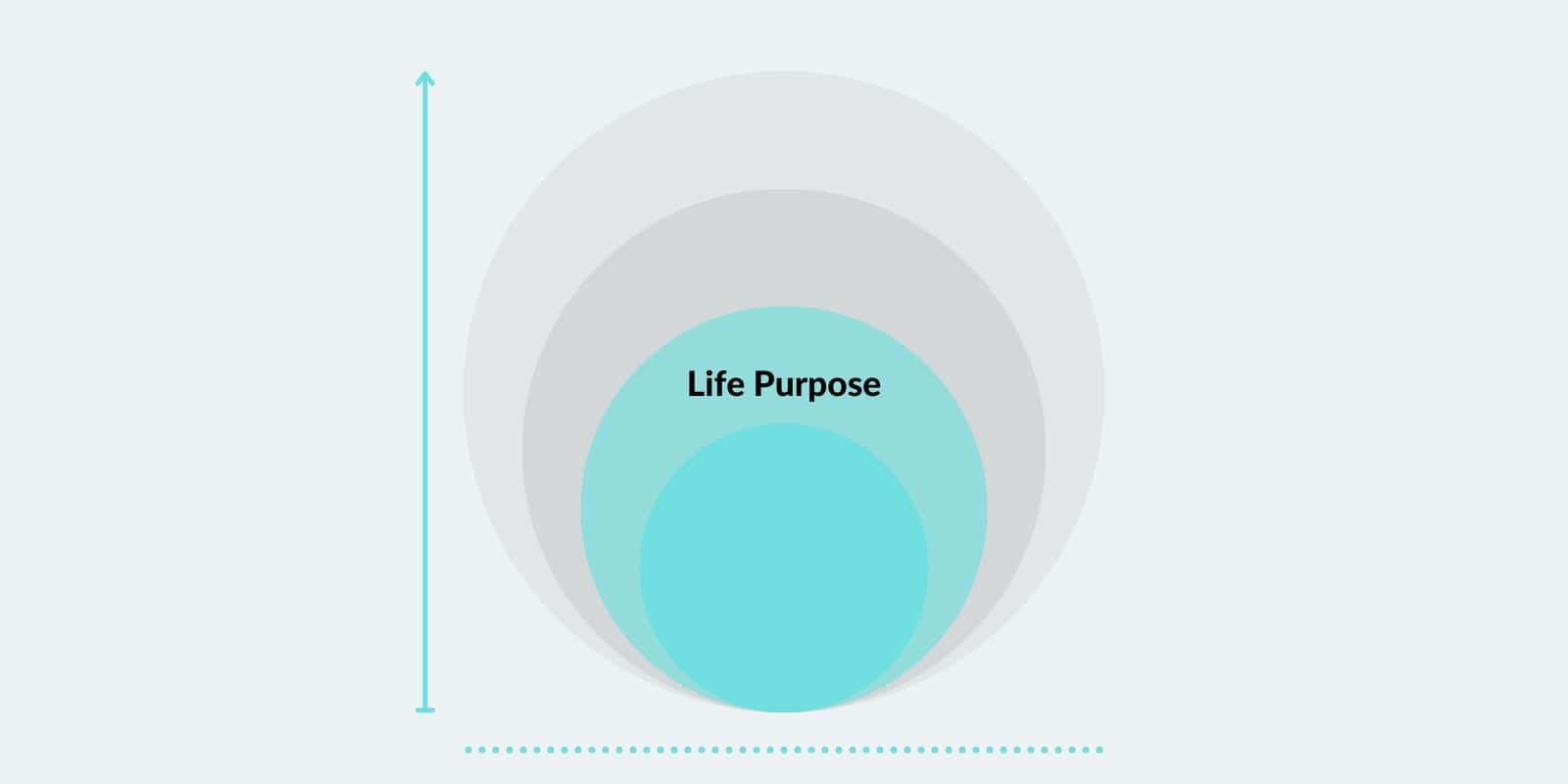
2️⃣ Explore More: 50+ posts on Life Purpose (Sloww Stage 2)
🧭 Featured Product: Ikigai 2.0: A Step-by-Step Guidebook to Finding Life Purpose & Making Money Meaningfully (+ Bonus Workbook)
🪷 Bridging East & West with the ‘Psychology of Awakening’
I’m only partway through John Welwood’s Toward a Psychology of Awakening, but it’s already full of highlights. I’ve been specifically searching out more writers and books that bridge Western developmental psychology and Eastern philosophy/spirituality. This definitely checks the box.
- The West (in general): Focused on the horizontal dimension (the individual’s life as it unfolds in time); illuminates the conditioned mind; focused on the earthly half of human nature (the personal and the interpersonal); emphasis on individual psychology and conceptual understanding; focused on the workings of the surface mind (how it is conditioned by beliefs, culture, interpersonal imprints, childhood events); emphasizes the need for a strong ego (defined in terms of impulse control, self-esteem, and competence in worldly functioning); focuses on developing an individuated expression of true nature.
- The East (in general): Focused on the vertical, timeless dimension; illuminates unconditioned awareness; specialized in illuminating the timeless, suprapersonal ground of being (the ‘heaven’ side of human nature); emphasis on nonpersonal awareness and direct realization of truth; focused on the subtle energetic fields of the body-mind and the larger dimension of nonconceptual awareness; regards the ego (the separate, bounded, defensive self that appears to be in charge of the psyche) as ultimately unreal and unnecessary; focuses on absolute true nature (impersonal and shared by all alike).
“What then is the psychology of awakening? This term is meant to bridge and bring together two previously separate domains: individual and interpersonal psychology, as studied in the West, and the path of awakening, as articulated by many great spiritual lineages, especially the meditative traditions of the East. Western psychology has mostly neglected the spiritual domain, to its detriment, while the contemplative paths have lacked an adequate understanding of psychological dynamics, which inevitably play a major part in the process of spiritual development.”
3️⃣ Explore More: 100+ posts on Mental Mastery (Sloww Stage 3)
🧠 Featured Product: Mini Mind: 365 Days of Bite-Size Brain Food
🧘 The Origin of ‘Spiritual Bypassing’
I’m very familiar with the term ‘spiritual bypassing’, but I didn’t realize John Welwood coined it in the 1980s. Here’s what he had to say about it in the book Toward a Psychology of Awakening:
- “Starting in the 1970s I began to perceive a disturbing tendency among many members of spiritual communities. Although many spiritual practitioners were doing good work on themselves, I noticed a widespread tendency to use spiritual practice to bypass or avoid dealing with certain personal or emotional ‘unfinished business.’ This desire to find release from the earthly structures that seem to entrap us—the structures of karma, conditioning, body, form, matter, personality—has been a central motive in the spiritual search for thousands of years. So there is often a tendency to use spiritual practice to try to rise above our emotional and personal issues—all those messy, unresolved matters that weigh us down. I call this tendency to avoid or prematurely transcend basic human needs, feelings, and developmental tasks spiritual bypassing.”
- “Spiritual bypassing is particularly tempting for people who are having difficulty navigating life’s developmental challenges, especially in a time and culture like ours, where what were once ordinary landmarks of adulthood—earning a livelihood through dignified work, raising a family, keeping a marriage together, belonging to a meaningful community—have become increasingly elusive for large segments of the population. While still struggling to find themselves, many people are introduced to spiritual teachings and practices that urge them to give themselves up. As a result, they wind up using spiritual practices to create a new ‘spiritual’ identity, which is actually an old dysfunctional identity—based on avoidance of unresolved psychological issues—repackaged in a new guise. In this way, involvement in spiritual teachings and practices can become a way to rationalize and reinforce old defenses.”
- “Spiritual bypassing is … to turn away from what is difficult or unpleasant, such as the vicissitudes of a weak ego: if you do not feel strong enough to deal with the difficulties of this world, then you find ways to transcend your personal feelings altogether. This is a major potential pitfall of the spiritual path, especially for modern Westerners. The attempt to avoid facing the unresolved issues of the conditioned personality only keeps us caught in their grip.”
- “Spiritual bypassing is using spiritual ideas and practices to sidestep personal, emotional ‘unfinished business,’ to shore up a shaky sense of self, or to belittle basic needs, feelings, and developmental tasks, all in the name of enlightenment.”
- “Spiritual bypassing often adopts a rationale based on using absolute truth to deny or disparage relative truth.”
4️⃣ Explore More: 100+ posts on Spiritual Seeing (Sloww Stage 4)
👣 Featured Product: Wise Walk: 365 Days of Enlightening Exercise
“Madness need not be all breakdown. It may also be break-through.” — R. D. Laing
Share: Sloww Sunday currently sends to 10,000+ students of life each week. If you enjoyed this issue, please help grow Sloww by forwarding this newsletter to some friends and family. It’s free for them to subscribe here.
Support: Sloww is a one-human labor of love (it’s just me over here 👋). Your support keeps the site ad-free and invests in me while you invest in yourself—a true win-win! There are free and financial ways to support.
Speak: Have something you want to say, or just want to say hi? It’s always greatly appreciated. Just leave a comment or reach out socially.
All the best,
Kyle Kowalski
Founder, Sloww