This is an essay summary of On the Freedom of the Will by Arthur Schopenhauer (Amazon):
Quick Housekeeping:
- All content in “quotation marks” is from the author (otherwise it’s minimally paraphrased).
- All content is organized into my own themes (not the author’s chapters).
- Emphasis has been added in bold for readability/skimmability.
Book Summary Contents:
- What the masses miss
- On “I can do what I will”
- Willing will
- Thought Experiments
- Character & Motives
- Accidents & Necessity
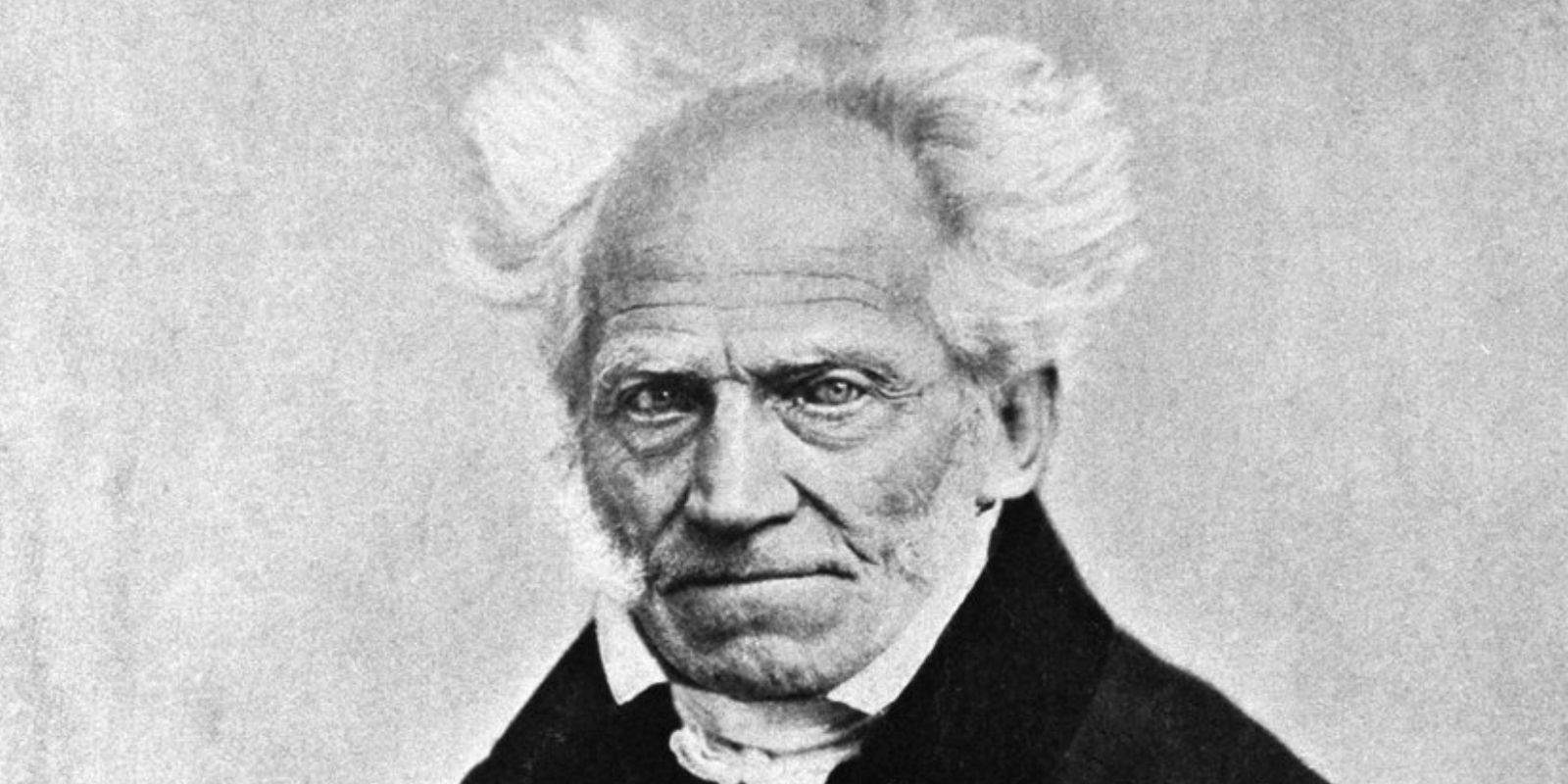
Willing will: “On the Freedom of the Will” by Arthur Schopenhauer (Essay Summary)
What the masses miss
“The question of the freedom of the will is really a touchstone by which one can distinguish the deeply thinking minds from the superficial ones, or it is a milestone at which their ways part, all the former maintaining the necessary occurrence of an action when the character and the motive are given, and the latter, together with the great masses, clinging to the freedom of the will.”
“Nature has at all times produced very few real thinkers, as rare exceptions, but also that these few have themselves existed only for very few. Precisely for this reason, folly and error continue their reign.”
“The truth which I defend may be one of those to which the preconceived opinions of the short-sighted masses are opposed. Indeed, it may be offensive to the weak and the ignorant. But this must not keep me from presenting it without circumlocutions and without reserve.”
“As long as it is a matter of establishing and confirming the truth, the honest seeker will always look to its grounds alone and not to its consequences. The time for that will come when the truth itself is established. Unconcerned about the consequences, we are only to examine our grounds, without first asking whether a recognized truth is or is not in harmony with the system of our other convictions.”
- “As primarily and essentially a practical, not a theoretical being, man is much more distinctly conscious of the active aspect of his volitions, that is, of their effectiveness, than of the passive aspect, that is, of their dependence. It is precisely for these reasons that it is difficult to make clear to a philosophically untrained person the real meaning of our problem and to make him understand that the question now is not about the effects but about the grounds of each act of willing. We grant that his acting depends entirely on his willing, but now we want to know on what his willing itself depends. Does it depend on nothing at all or on something?”
- “If one says: ‘But your willing itself, on what does it depend?’, the man will fall back on the self-consciousness: ‘On nothing else but myself. I can will what I will: what I will, that I will.’ And he says this without intending it to be a tautology, or without even leaning in his innermost consciousness on the law of identity, by virtue of which alone this is true. But rather, being very hard put to it, he talks about a willing of his willing, which is the same as if he talked about the self of his self. One has pushed him back to the very heart of his self-consciousness, where he encounters his self and his will as indistinguishable, but where nothing remains to pass judgment on both of them.”
- “The ingenuous but philosophically untrained man will still try to escape the perplexity which the question, when really understood, must bring about, by hiding behind that immediate certainty ‘what I will, I can do, and I will what I will’ … This he will try again and again, countless times, so that it will be difficult to confront him with the real question, from which he all the time tries to escape.”
- “Everyone’s self-consciousness asserts very clearly that he can do what he wills. But since we can conceive of him as willing quite opposite actions, it follows that if he so wills he can also do the opposite. Now the untutored understanding confuses this with the proposition that he, in a given case, can also will the opposite, and calls this the freedom of the will. But that in any given case he can will the opposite is absolutely not contained in the above proposition, but only this, namely, that of two contrary actions he can perform one action, if he wills it, or he can likewise perform the other one, if he wills that.”
- “Man is capable of deliberation, and thanks to this capacity he has a far greater choice than is possible for the animal. Because of this he is, of course, relatively free. He is free of the immediate compulsion of the perceptually present objects which act as motives on his will. To this the animal is subject absolutely. Man, on the other hand, determines himself independently of the present objects, namely by thoughts, which are his motives. At bottom, it is probably this relative freedom that educated yet not deeply thinking people understand by the freedom of the will, clearly putting man ahead of the animals. This freedom, however, is only relative, namely, in relation to that which is present in perception, and only comparative, namely, in comparison with the animal.”
- “We must no longer seek the work of our freedom in our individual actions, as the general opinion does, but in the whole being and essence (existentia et essentia) of the man himself.”
On “I can do what I will”
“That undeniable assertion of the self-consciousness, ‘I can do what I will,’ contains and decides nothing at all about the freedom of the will.”
“We are searching for the relationship of the willing itself to the motive, and about this the assertion ‘I can do what I will’ says nothing. The self-consciousness does indeed affirm the dependence of our behavior, that is, of our bodily actions, on our will. But this dependence is something quite different from an independence of external circumstances on the part of our volitions.”
- “If we were to ask an unsophisticated person to describe that immediate consciousness which is so often regarded as that of an alleged freedom of the will, we would get something like the following answer: ‘I can do what I will: if I will to go to the left, I go to the left; if I will to go to the right, I go to the right. This depends entirely on my will; therefore, I am free.’ Of course this assertion is entirely true and correct, only the will is already presupposed in it, for it assumes that the will has already decided. Consequently, nothing can be established about its own freedom in this manner. The assertion does not at all speak about the dependence or independence of the occurrence of the act of volition itself, but only about the effects of this act as soon as it occurs, or, to be more precise, about its unfailing manifestation as bodily action. It is, however, nothing but the consciousness underlying this assertion that leads the layman, that is, the philosophically untrained person—who nevertheless in other areas can be very learned—to regard the freedom of the will as so immediately certain that he expresses it as indubitable truth and cannot really believe that philosophers seriously doubt it. Such a man believes in his heart that all this loose talk is a mere sparring exercise in academic dialectic and is at bottom a joke.”
- “Ask a man who is of sound mind but who has no philosophical training in what the freedom of the will consists, which he so confidently maintained on the basis of the assertion of his self-consciousness, and he will answer: ‘It consists in this: I can do what I will provided I am not hindered physically.’ Hence it is always the relation of his acting to his willing that he speaks of. But this, as has been shown in the first section, is still merely physical, freedom. If one asks him further whether in a given case he can will the one thing as well as he can its opposite, he will in his first zeal, to be sure, affirm this. But as soon as he starts to grasp the meaning of the question he will begin to have doubts, finally sink into uncertainty and confusion, and again prefer to take refuge behind his thesis ‘I can do what I will.’ There he will fortify himself against all grounds and all reasoning. But the corrected answer to his thesis, as I hope to free from all doubt in the next section, would be as follows: ‘You can do what you will, but in any given moment of your life you can will only one definite thing and absolutely nothing other than that one thing.'”
- “Because such motives are not bound to any present and any specific surroundings, and because the obstacles to them in turn consist of mere thoughts as countermotives, this man is brought so far that he even doubts their existence or the necessity of their effects and thinks that whatever is done could just as well remain not done, that the will decides all by itself, without any cause, and that every one of his acts is the beginning of an incalculable series of changes it had initiated. This error gains a special support from the false interpretation of the assertion of the self-consciousness, ‘I can do what I will,’ which was extensively examined in the first section, particularly when this assertion is uttered, as is always the case, upon the action of several initially merely soliciting and mutually exclusive motives. All of this taken together, then, is the source of the natural delusion which leads to the erroneous view that our self-consciousness contains the certainty of a freedom of our will, in the sense that, contrary to all laws of pure understanding and of nature, it determines itself without sufficient grounds, and that its resolves, under given circumstances and in one and the same man, could turn out in this way or in the opposite way.”
Willing will
“Man does at all times only what he wills, and yet he does this necessarily. But this is due to the fact that he already is what he wills. For from that which he is, there follows of necessity everything that he, at any time, does.”
- “As everyone may find out by introspection, that which the self-consciousness says about volitions, when freed of all foreign and inessential elements and reduced to its naked content, can be expressed by something like this: ‘I can will, and if I will an action, the movable members of my body will immediately perform it as soon as I will it, quite without fail.’ This means, in brief: ‘I can do what I will.’ Farther than this the assertion of the immediate self-consciousness does not go, no matter how one may try to turn it about and in what way one asks the question. What it asserts then always refers to the ability to act in accordance with the will. But this is the empirical, original, and popular concept of freedom which we set up at the very beginning, and according to which ‘free’ means ‘in accordance with the will.’ The self-consciousness will absolutely affirm this freedom. But that is not the freedom we are asking about. The self-consciousness affirms the freedom of action—when the willing is presupposed. But what is being inquired into is precisely the freedom of willing.”
- “On close inspection, the original, purely empirical, and hence popular concept of freedom shows itself incapable of becoming thus related to willing. For according to it ‘free’ means ‘in accordance with one’s own will.’ Consequently, to ask whether the will itself is free, is to ask whether the will is in accordance with itself. This, of course, is self-evident, but says also nothing at all. The empirical concept of freedom signifies: ‘I am free when I can do what I will.’ Here in the phrase ‘what I will’ the freedom is already affirmed. But when we now inquire about the freedom of willing itself, the question would then take this form: ‘Can you also will your volitions?’, as if a volition depended on another volition which lay behind it. Suppose that this question is answered in the affirmative, what then? Another question would arise: ‘Can you also will that which you will to will?’ Thus we would be pushed back indefinitely, since we would think that a volition depended on a previous, deeper lying volition. In vain would we try to arrive in this way finally at a volition which we must think of and accept as dependent on nothing else.”
- “The self-consciousness contains only the willing but not the grounds which determine the willing.”
- “In the final analysis this is due to the fact that man’s will is his authentic self, the true core of his being; hence it constitutes the ground of his consciousness as something which is simply given and present and beyond which he cannot go. For he himself is as he wills, and wills as he is. Therefore to ask him whether he could also will differently than he does is to ask whether he could also be other than himself; and that he does not know.”
- “He can wish two opposing actions, but will only one of them. Only the act reveals to his self-consciousness which of the two he wills.”
Thought Experiments
Try these simple thought experiments…
The man leaving work:
- “Let us imagine a man who, while standing on the street, would say to himself: ‘It is six o’clock in the evening, the working day is over. Now I can go for a walk, or I can go to the club; I can also climb up the tower to see the sun set; I can go to the theater; I can visit this friend or that one; indeed, I also can run out of the gate, into the wide world, and never return. All of this is strictly up to me, in this I have complete freedom. But still I shall do none of these things now, but with just as free a will I shall go home to my wife.’ This is exactly as if water spoke to itself: ‘I can make high waves (yes! in the sea during a storm), I can rush down hill (yes! in the river bed), I can plunge down foaming and gushing (yes! in the waterfall), I can rise freely as a stream of water into the air (yes! in the fountain), I can, finally, boil away and disappear (yes! at a certain temperature); but I am doing none of these things now, and am voluntarily remaining quiet and clear water in the reflecting pond.’ As the water can do all those things only when the determining causes operate for the one or the other, so that man can do what he imagines himself able to do not otherwise than on the same condition. Until the causes begin to operate, this is impossible for him; but then, he must, as the water must, as soon as it is placed in the corresponding circumstances.”
- “His ‘I can will this’ is in reality hypothetical and carries with it the additional clause, ‘if I did not prefer the other.’ But this addition annuls that ability to will.”
- “Let us return to that man whom we had engaged in a deliberation at six o’clock. Suppose he noticed that I am standing behind him, philosophizing about him, and disputing his freedom to perform all those actions which are possible to him. It could easily happen that, in order to refute me, he would perform one of them. But then my denial and its effect on his contentious spirit would have been precisely the motive which forced him to do so. However, this motive would be able to move him only to one or the other of the easier of the above-mentioned actions, e.g., to go to the theater, but by no means to the last-mentioned, namely, to run out into the wide world; this motive would be far too weak for that.”
Shooting yourself (or not):
- “An equally erroneous supposition is made by a person who, holding a loaded pistol in his hand, thinks that he can shoot himself with it. For this the mechanical instrument is of the least importance; the main thing is an exceedingly strong and therefore rare motive which has the tremendous power required to outweigh the love of life, or, more correctly, the fear of death. Only after such a motive has entered in can he really shoot himself, and must do so; unless an even stronger countermotive, if such a one is at all possible, prevents the deed.”
Giving everything to the poor:
- “I can do what I will: I can, if I will, give everything I have to the poor and thus become poor myself—if I will! But I cannot will this, because the opposing motives have much too much power over me for me to be able to. On the other hand, if I had a different character, even to the extent that I were a saint, then I would be able to will it. But then I could not keep from willing it, and hence I would have to do so.”
Getting up from your chair:
- “It is definitely neither a metaphor nor a hyperbole but a quite dry and literal truth that, as little as a ball on a billiard table can move before receiving an impact, so little can a man get up from his chair before being drawn or driven by a motive. But then his getting up is as necessary and inevitable as the rolling of a ball after the impact.”
Character & Motives
“The intellect, or the cognitive faculty, is the medium of motives. Through this medium they act on the will, which is the real essence of man.”
- “Every action of a man is the product of two factors: his character along with a motive.”
- “The decidedly strongest motive drives the others from the field and determines the will.”
- “The acting motive encounters this particular character, and this character is determinable by such a motive. The character is the empirically recognized, persistent, and unchangeable nature of an individual will.”
- “As every effect in inanimate nature is a necessary product of two factors, namely, of the general natural force which manifests itself here and of the particular cause which calls forth this manifestation, just so every action of a man is the necessary product of his character and of the operating motive. Given both of them, the effect follows inevitably. For a different action to occur, either a different motive or a different character would have to be posited.”
- “From the knowledge of motives alone one cannot predict the act; in addition one must also have precise knowledge of the character in question.”
- “The individual character is inborn; it is not a work of art or of accidental circumstances, but the work of nature itself … The inborn character of a man determines in essentials even the goals toward which he unalterably strives: the means which he takes for this purpose are determined partly by the external circumstances and partly by his conception of them.”
- “The character of man is constant: it remains the same, throughout the whole of life … Man never changes; as he has acted in one case, so he will always act again—given completely equal circumstances (which, however, includes also the correct knowledge of those circumstances) … The character is unchangeable, and motives operate of necessity; however, they must pass through cognition, which is the medium of the motives.”
- “When we want to determine the moral worth of an action, we make a special effort to be sure about its motive, but then our praise or blame is not aimed at the motive but at the character which allowed itself to be determined by such a motive, the character being the second and the only factor in this act which inheres in the man himself.”
- “Our acts are indeed not a first beginning; therefore nothing really new comes through them into being. But this is true: through that which we do we only find out what we are.” (Also “From what we do we know what we are.”)
- “Everything depends on what one is; what he does will follow therefrom of itself, as a necessary corollary.”
- “Motivation is not different in essentials from causality but is only a kind of it, namely, the causality which passes through the medium of cognition. Here too the cause calls forth only a manifestation of a force which cannot be traced back to further causes, and consequently cannot be further explained. But this force, here called the will, is known to us not only from the outside like the other natural forces, but, by virtue of the self-consciousness, also from the inside and immediately. Only under the presupposition that such a will exists and that, in any given case, it is of a definite nature do causes directed toward it take effect, which are here called motives. This particularly and individually constituted nature of the will, by virtue of which its reaction to the same motives in every man is different, makes up that which one calls his character and, what is more, because it is not known a priori but only through experience, the empirical character. It is by its means that, to start with, the way in which various motives affect the given man is determined. For it underlies all effects which motives call forth in the same way as the general natural forces…”
Accidents & Necessity
“Even the smallest accident happens necessarily and all occurrences, so to speak, keep time with one another, so that everything reverberates in everything else.”
- “We think of the accidental as the opposite of the necessary. But there is no conflict between these two views; each accidental occurrence is only relatively so. For in the world of reality, where alone accidents can be encountered, every event is necessary in relation to its cause, while in relation to all other events which are contemporaneous and spatially contiguous with it, the event is accidental. But since the mark of freedom is absence of necessity, that which is free would have to be absolutely independent of any cause and would therefore have to be defined as absolutely accidental.”
- “To wish that some event had not taken place is a silly self-torture, for this means to wish something absolutely impossible, and is as irrational as is the wish that the sun should rise in the West. Precisely because everything that happens, great or small, happens with strict necessity, it is altogether useless to reflect on how insignificant and accidental were the causes which brought that event about, and how easily they could have been different. For this is illusory. All of them have happened with just as strict necessity and have done this work with just as full a power as that in virtue of which the sun rises in the East.”
- “Every consequent of a ground is necessary, and every necessity is the consequent of a ground.”
- “Something is necessary which follows from a given sufficient ground.”
- “Only in so far as we comprehend something as the consequent of a given ground do we recognize it to be necessary. Conversely, as soon as we recognize something to be a consequent of a sufficient ground, we see that it is necessary.”
- “To be necessary and to be the consequent of a given ground are interchangeable concepts.”
- “The actions of men, like everything else in nature, take place in any given case as an effect which follows necessarily.”
- “…the strict necessity with which acts follow from a given character and given motives.”
- “Everything that happens, from the largest to the smallest, happens necessarily.”
- “Everything acts according to its nature, and its acts as they respond to causes make this nature known. Every man acts according to what he is, and the action, which is accordingly necessary in each case, is determined solely by the motives in the individual case.”
You May Also Enjoy:
- Browse all book summaries & book recommendations / reading list