This page lists some of the all-time best Galen Strawson quotes.
Bold has been added for emphasis. Enjoy!
Page Contents:
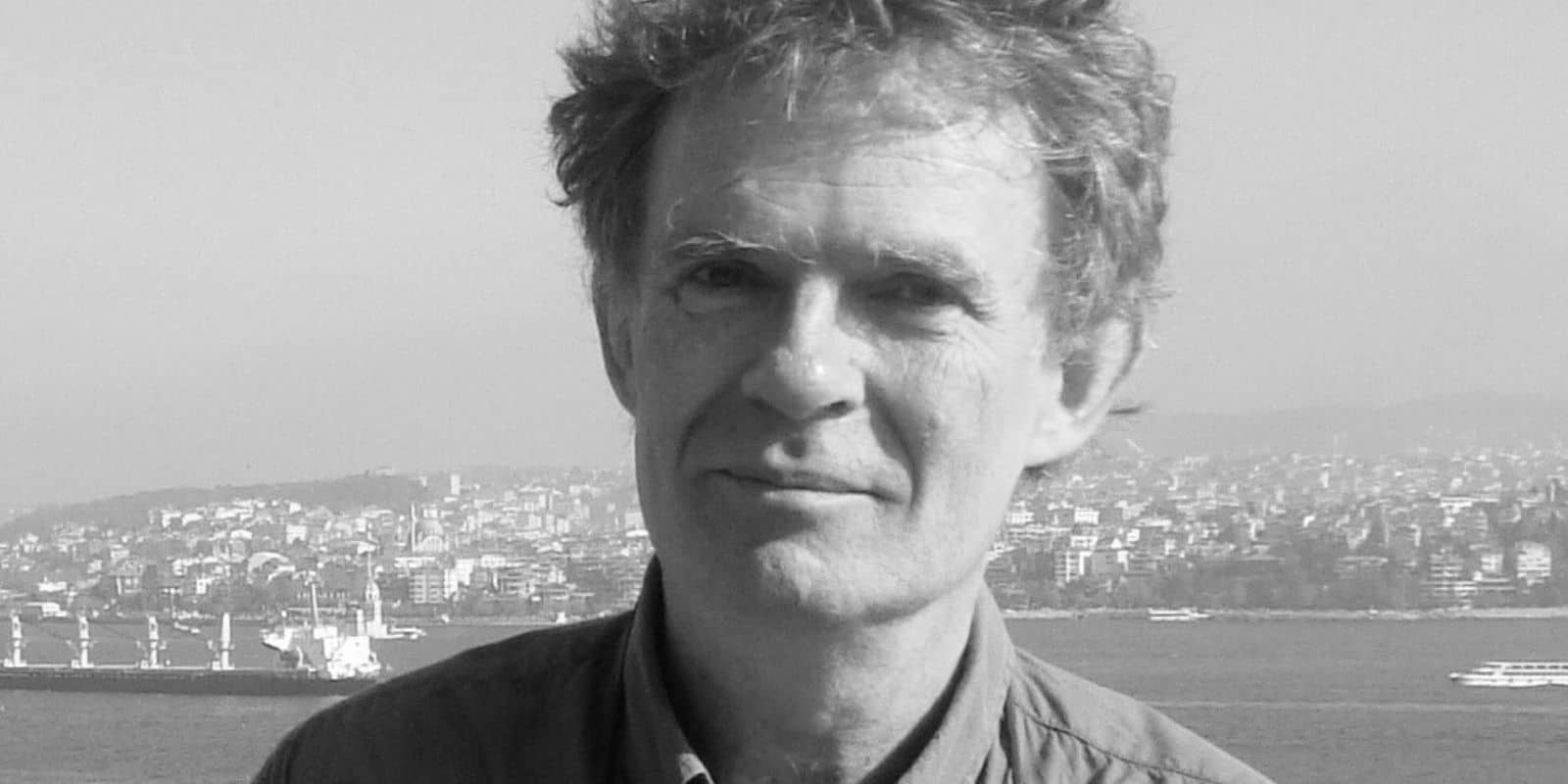
50+ Galen Strawson Quotes on Luck, Free Will, Moral Responsibility, & More
Galen Strawson Quotes on Thinking
“Those who take it, perhaps very unreflectively, that much or most of their thinking is a matter of action are I believe deluded.”
“If we consider things plainly, we find…that most of our thoughts—our thought contents—just happen. In this sense they are spontaneous…not actions at all. Contents occur, spring up—the process is largely automatic.”
“No ordinary thinking of a particular thought-content, conscious or otherwise, is ever an action. No actual natural thinking of a thought, no actual having of a particular thought-content, is ever itself an action. Mental action in thinking is restricted to the fostering of conditions hospitable to contents’ coming to mind. The coming to mind itself—the actual occurrence of thoughts, conscious or nonconscious—is not a matter of action.”
“Call what goes on mental spontaneity if you like, allow the arising of contents to be a matter of spontaneity; but admit, then, that spontaneity has nothing particularly to do with action or will, and nothing at all to do with freedom of choice.”
“The rest is waiting, seeing if anything happens, waiting for content to come to mind, for the ‘natural causality of reason’ to operate in one. This operation is indeed spontaneous, but in the sense of ‘involuntary, not due to conscious volition.'”
“Thought, it seems, is often a matter of things just happening, and the passive or non-agentive nature of the ordinary experience of thought is vividly expressed in many of our idioms: ‘I realized that p’, ‘It struck me that q’, ‘I had an idea’, ‘I noticed that r’, ‘Then I understood’, ‘The scales fell from my eyes’, ‘The thought crossed my mind’; ‘I saw the answer’, ‘It suddenly came to me’, ‘It occurred to me—it dawned on me’, I remembered that s’, ‘It hit me that t’, ‘I found myself thinking that u’, ‘v!—of course—how stupid of me!’”
“What in the end does one do, when one tries to think and write and nothing comes? One sits and waits. One more or less vaguely pushes one’s mind in the right direction, or re-reads one’s previous sentence, and waits for something to happen. Then, if all goes well, something comes to one, occurs to one, strikes one. One has an idea. It is something given.”
“There is relatively little action in mental life, especially in the case that most concerns me: cognition in the widest sense. No coming to entertain a content, and no comprehending entertaining of a content, in reasoning, thinking, judging, or anything else, is itself an action.”
“All in all, it seems to me that most of deciding what to do is best seen as something that just happens.”
“The fundamental point: human minds are powerfully governed by deep, natural, non-agentive principles of operation.”
“One can live a good—amazing—human life without any significant experience of oneself as an agent in one’s mentation.”
Galen Strawson Quotes on Luck
“In the end, luck swallows everything: this is one way of conveying the fundamental respect in which there can be no ultimate responsibility. In this sense, no punishment or reward is ever ultimately just or fair, however natural or useful or otherwise humanly fitting or appropriate it may be or seem.”
“No one can be ultimately deserving of praise or blame for anything. It’s not possible. This is very, very hard to swallow, but that’s how it is. Ultimately, it all comes down to luck: luck—good or bad—in being born the way we are, luck—good or bad—in what then happens to shape us. We can’t be ultimately responsible for how we are in such a way as to have absolutely, buck-stopping responsibility for what we do.”
“Suppose you are someone who struggles to be morally responsible, and make an enormous effort. Well, that too is a matter of luck. You’re lucky to be someone who has a character of a sort that disposes you to be able to make that sort of effort. Someone who lacks a character of that sort is merely unlucky.”
“People sometimes think that one can take credit for effort even if one can’t take credit for natural talent, but in the end being the kind of person who’s got determination and who perseveres and makes an effort–that too is a gift, a piece of luck.”
“The claim is not that people can’t change the way they are. They can, in certain respects (which tend to be exaggerated by North Americans and underestimated, perhaps, by members of other cultures). The claim is only that people can’t be supposed to change themselves in such a way as to be or become ultimately responsible for the way they are, and hence for their actions. One can put the point by saying that in the final analysis the way you are is, in every last detail, a matter of luck—good or bad.”
Galen Strawson Quotes on Moral Responsibility
See Galen Strawson’s basic argument against ultimate moral responsibility.
“Ultimate, buck-stopping moral responsibility is impossible, because it requires ultimate responsibility for how one is … One can’t be ultimately responsible for one’s character or mental nature in any way at all.”
“You’re not ultimately responsible for what you do because you didn’t make yourself the way you are … You are a thing made not ultimately by you … How might we be changed by dwelling intensely on the view that ultimate responsibility is impossible?”
“True origination, of the true-responsibility-creating kind we seem to want, is impossible in any case.”
“To be absolutely responsible for what one does, one would have to be causa sui, the cause of oneself, and this is impossible.”
“In order for one to be truly or ultimately responsible for how one is in such a way that one can be truly responsible for what one does, something impossible has to be true: there has to be, and cannot be, a starting point in the series of acts of bringing it about that one has a certain nature; a starting point that constitutes an act of ultimate self-origination. There’s a more concise way of putting the point: in order to be ultimately responsible, one would have to be causa sui—the ultimate cause or origin of oneself, or at least of some crucial part of one’s mental nature. But nothing can be ultimately causa sui in any respect at all.”
“Nothing can be causa sui—nothing can be the cause of itself. In order to be truly or ultimately morally responsible for one’s actions one would have to be causa sui, at least in certain crucial mental respects. Therefore, no one can be truly or ultimately morally responsible.”
“In the end, whatever we do, we do it either as a result of random influences for which we are not responsible, or as a result of non-random influences for which we are not responsible, or as a result of influences for which we are proximally responsible but not ultimately responsible. The point seems obvious. Nothing can be ultimately causa sui in any respect at all.”
“You can’t be ultimately responsible for the way you are because you’d have to be there already to kind of set yourself up, and that would lead to an infinite regress … You can’t get ‘back behind yourself’ in such a way as to be responsible for the kind of person you are.”
“Suppose you do want to acquire a want you haven’t got. The question is, where did the first want—the want for a want—come from? It seems it was just there, just a given, not something you chose or engineered. It was just there, like most of your preferences … The question just re-arises: Where did that want come from? You certainly can’t go on like this forever. At some point your wants must be just given. They will be products of your genetic inheritance and upbringing that you had no say in. In other words, there’s a fundamental sense in which you did not and cannot make yourself the way you are.”
“Whatever one actually does, one will do what one does because of the way one is, and the way one is is something for which one neither is nor can be responsible, however self-consciously aware of one’s situation one is.”
Galen Strawson Quotes on Free Will
“There’s a fundamental sense in which free will is impossible, and it doesn’t make any difference whether the world is determined or not—it’s impossible either way.”
“Almost all human beings believe that they’re free to choose what to do in such a way that they can be truly, genuinely responsible for their actions in the strongest possible sense—responsible period, responsible without any qualification, responsible sans phrase, responsible tout court, absolutely, radically, buck-stoppingly responsible; ultimately responsible, in a word—and so ultimately morally responsible when moral matters are at issue. Free will is the thing you have to have if you’re going to be responsible in this all-or-nothing way. That’s what I mean by free will. That’s what I think we haven’t got and can’t have.”
“Strong free will … is incoherent, logically impossible … Nearly all of those who believe in strong free will do so without any conscious thought that it requires ultimate self-origination. But self-origination is the only thing that could actually ground the kind of strong free will that is regularly believed in.”
“Whether determinism is true or false, we cannot be ultimate originators of our actions in the way in which we ordinarily and unreflectively suppose that we can be—that is, in the true-desert, true-moral-responsibility entailing way … The image of true-desert-entailing, true-credit-creating origination has to be given up whether determinism is true or false.”
“We are born with a great many genetically determined predispositions for which we are not responsible. We are subject to many early influences for which we are not responsible. These decisively shape our characters, our motives, the general bent and strength of our capacity to make efforts of will.”
“We are what we are, and we cannot be thought to have made ourselves in such a way that we can be held to be free in our actions in such a way that we can be held to be morally responsible for our actions in such a way that any punishment or reward for our actions is ultimately just or fair.”
“There is a fundamental ‘strong’ sense of the word ‘free’ given which we neither are nor can be free agents in such a way as to be truly or ultimately responsible for what we do.”
“We cannot be free agents in the absolute way we sometimes suppose because we cannot be ultimately (morally) responsible for our actions.”
“Human beings cannot be ultimately self-determining in such a way as to be ultimately morally responsible for how they are, and thus for how they decide and act.”
“One does what one does entirely because of the way one is, and one is in no way ultimately responsible for the way one is.”
Galen Strawson Quotes on How to Live
“As a philosopher I think the impossibility of free will and ultimate moral responsibility can be proved with complete certainty. It’s just that I can’t really live with this fact from day to day. Can you, really?”
“There’s a fundamental sense in which free will is impossible, and it doesn’t make any difference whether the world is determined or not—it’s impossible either way. At the same time, I think we can’t help believing we’ve got it. So, it’s perhaps the most dramatic, irresoluble clash in the whole of philosophy.”
“The no-freedom theorists argument that we can’t possibly have strong free will keeps bumping into the fact that we can’t help believing that we do.”
“We can’t be ultimately responsible for how we are in such a way as to have absolute, buck-stopping responsibility for what we do. At the same time, it seems we can’t help believing that we do have absolute buck-stopping responsibility.”
“My claim is that even if you believe the argument that shows ultimate moral responsibility is impossible, you cannot help living that moment as a moment of radical freedom. In the lived moment, you must experience yourself as free.”
“You’re not free not to choose (that’s how it feels). You’re ‘condemned to freedom,’ in Jean-Paul Sartre’s phrase. You’re fully and explicitly conscious of what the options are and you can’t escape that consciousness. You can’t somehow slip out of it.”
“We are not free to choose whether or not to be free to choose (referencing Sartre).”
“Given that the experience of deep moral responsibility is seemingly inevitable in our everyday lives, can we shake free of it, can we at least diminish it, can we somehow truly live, breathe the impossibility of deep moral responsibility, and not just accept it in a merely theoretical context?”
“It might take years of spiritual discipline to get to ‘living the fact’ (though actually one can get quite a way by ordinary secular reflection).”
“(Jiddu) Krishnamurti convinces me that it’s not actually impossible for human beings to live the fact that there is no deep moral responsibility … The Indian mystical thinker Krishnamurti reports that the experience of radical choice simply fades away when you advance spiritually: ‘You do not choose, you do not decide when you see things very clearly; then you act (in a way which) which is not the action of will. . . . Only the unintelligent mind exercises choice in life. . . . A truly intelligent (spiritually advanced) man can have no choice, because his mind can be aware of what is true, and can thus only choose the path of truth. It simply cannot have choice. Only the unintelligent mind has free will.'”
You May Also Enjoy:
- Browse all Quote Posts