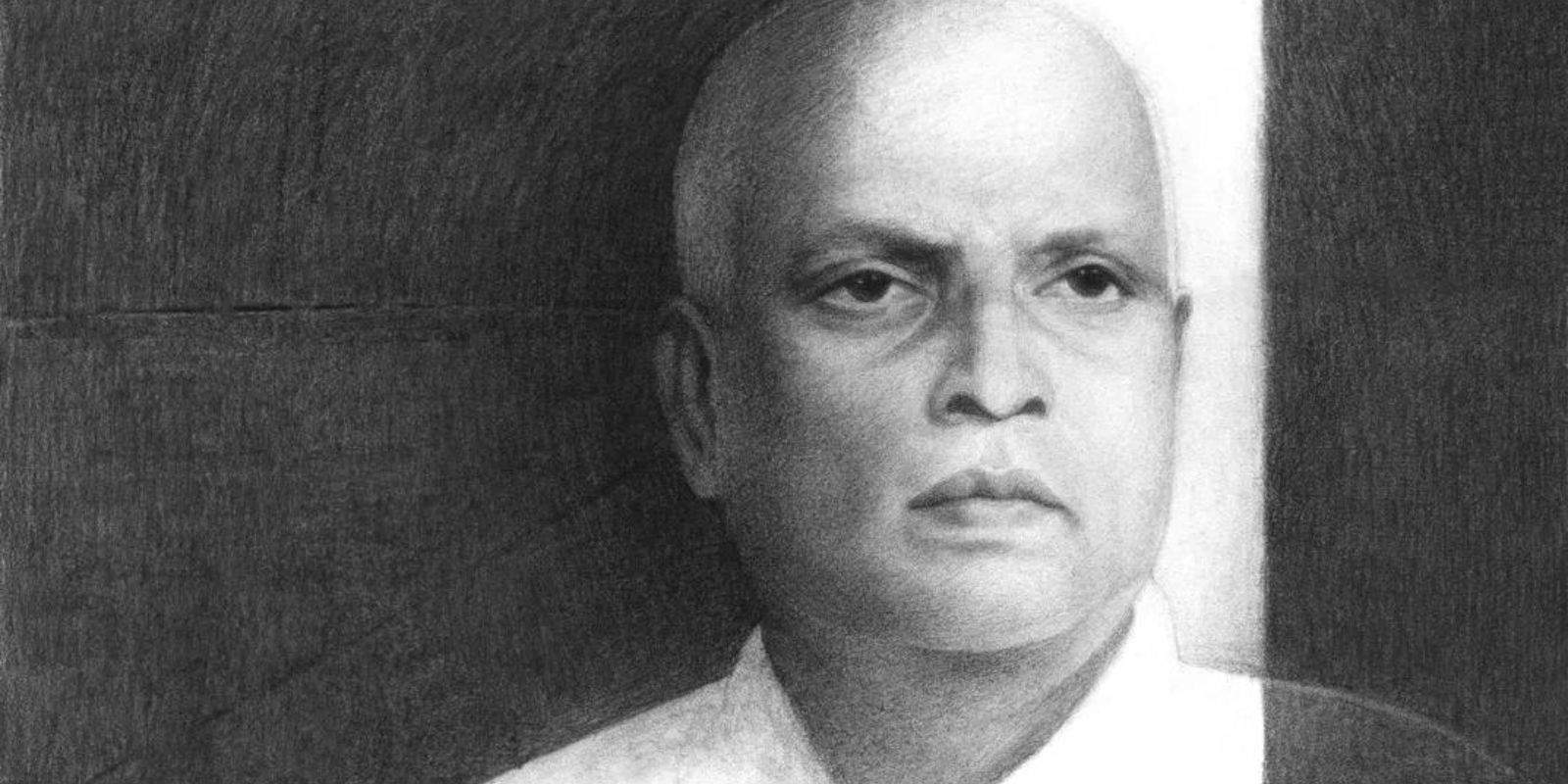
This is a book summary of Atma Darshan and Atma Nirvriti by Sri Atmananda Krishna Menon.
“When water is realised, wave and sea vanish. What appeared as two is thus realised as one. Water can be reached straightaway from wave by following the direct path. If the way through the sea is taken, much more time is needed.”
Quick Housekeeping:
- All content in “quotation marks” is from the author (otherwise it’s paraphrased).
- All content is organized into my own themes (not the author’s chapters).
- Emphasis has been added in bold for readability/skimmability.
Book Summary Contents:
The Direct Path: Atma Darshan & Atma Nirvriti by Sri Atmananda Krishna Menon (Book Summary)
Body-Mind & Bondage
“Are not body, prana, and all mind-modifications, percepts? Consciousness, the Self, is the perceiver. Those who, forgetting this, identify Self with body, mind, etc., live in bondage. Those who, by wise discrimination, rise above this wrong identification become liberated and rest in peace in their true nature.”
Body:
“The stand of an ignorant, worldly man is that he is a body, gross or subtle … When he perceives the body, he becomes its possessor and when doesn’t perceive it, he remains as body. Whatever happens to the body is claimed by him to be happening to himself on account of the close identification.”
- “The thought that one is the body, gross or subtle, is the cause of all bondage. If the thought is that one is Consciousness, and that thought is deep and strong, one becomes freed from all bondage at once.”
- “The seer as such can never be the seen, and the seen as such can never be the seer. If this truth goes deep into one’s heart, the mistaken identification with the body ceases.”
- “Before the seeing, there is no ‘seen’ and there is no ‘seen’ after the seeing. There can be no doubt about it. When this truth is clearly understood, it will be evident that there is no ‘seen’ even at the time of the seeing. And then ceases all bondage.”
Mind:
“It is mind that has thoughts and feelings, not I. Birth, growth, decay and death pertain to the body and not to Me. I am not body—I have no body. I am no mind—I have no mind.”
- “Even to hold that a thing rises in thought is mere delusion. There is thought only and the content of thought is Consciousness. If this truth is always kept alive, thought will soon vanish and Consciousness will reign. Then comes liberation from all bondage.”
- “There is no thought. There is only Consciousness … If one can see that thought, as such, is really nonexistent or that it is nothing other than Consciousness, this is the best means.”
- “When it is seen that the content of thought is nothing but Consciousness thought vanishes and Consciousness remains … Think of one’s being as that into which all thoughts merge, then the one thought taken hold of gives up its form and merges into Being.”
Objects & Objective World
“Consciousness going out towards objects is mind. That which turns towards the Self is pure Satva. It is the opinion of the wise that the product of mind is avidya and of Satva, vidya. Vidya alone is the means of liberation.”
Objects:
“Variety is in the objects (of consciousness). The perceiving consciousness is one and the same throughout. But because consciousness is commonly seen connected with the objects, change is attributed to that also by delusion. Objects can never cause any change in consciousness.”
- “Body, sense-organs, mind, will and intellect come under the category of objects … Sense-objects such as sound, touch, smell, etc., are mere thought-forms. Therefore, correctly speaking, thoughts alone are the objects of Consciousness … Form can exist only as the object of seeing and never independently of it. This rule applies to all sense-objects.”
- “Always bear in mind that such changes as birth, growth, decay and destruction, are characteristic of matter, the object of Consciousness … Objects of Consciousness can never be separated from Consciousness itself. They have no independent existence. They are therefore nothing other than Consciousness.”
- “Consciousness becomes dimmed chiefly through one’s captivation and abiding interest in external objects. When one outgrows this interest and looks at the objects it will be found that they rise and abide in Consciousness alone. When Consciousness thus begins to receive due attention, it becomes revealed in objects as well and they themselves will in due course become transformed into Consciousness. It is the realisation of oneself and the entire world as one Consciousness that is known as realisation of Truth.”
Objective World:
“Experience proves that the objective world will always appear in perfect tune with the stand taken up by the subject. Therefore, it is not the objective world which presents obstacles to one’s spiritual progress, but the false stand one has taken up. If this is given up, spiritual enlightenment follows. To give up the stand, courage and one-pointed attention and heart’s devotion are absolutely necessary. A critical examination of the objective world will bring about the same result.”
- “When reality is attributed to things in the objective world, remember that you are then an embodied being, in other words, there is then identification of one’s Self with the body.”
- “If all possibility of such superimposition is thus removed one comes to one’s natural state in which it is realised that the entire objective world is also nothing other than Consciousness.”
- “The world which rises in and grows by thought is also thought itself. Thought is nothing but Consciousness and Consciousness is My Being. Therefore the whole world is Consciousness which is Myself. I am perfect and indivisible.”
Atma & I
“For the sage, his stand is that he is pure consciousness … A sage knows well that consciousness is self-luminous and that it is consciousness that illumines the entire world. He knows also that his real nature is consciousness and experience and cannot as such be known or experienced. Hence he does not desire or make any attempt to know or experience it.”
Atma:
“Consciousness is Happiness itself. The Atma, signified by the word ‘I,’ is also That.”
- “Atma is the immutable Consciousness that, without effort or any change in Itself, perceives such modifications of the mind. A little thinking will show that this is the principle signified by the word ‘I.’ Abiding there, one sees nothing else; there is no body, mind, world or sense organs. Nothing came into existence nor is there indeed a thought that anything existed before or is existing now.”
- “That which shines just before and after every thought and feeling is the ‘I’. That is objectless consciousness; that is Atma … The ‘I’ must be transferred from body to Atma. Freedom from bondage, peace and happiness will flow from it.”
- “The light in the perception of sense objects is the changeless Atma, the One without a second which abides, infilling all. To see It as It is, the objects must be separated from It, or else they must be made to point towards it.”
Who am I?
“Always bear in mind that words such as Consciousness, Knowledge, Being or Happiness, all point to the ‘I’ … Objectless thought is one’s real domain, formless and changeless. It is this that is pointed to by the word ‘I’.”
- “Whether objects are present or absent, I am always there without change … It is in and through Me that all men see, yet they don’t see Me. This is most surprising … How can thoughts which rise and set in Me, be other than Myself? When there is thought, I am seeing Myself; when there is no thought, I am remaining in My own glory.”
- “I have no mine-ness, attachment or egoism. I am eternal, non-doer, all purity, self-dependent and self-luminous. Attributeless, changeless and unconditioned, I am the abode of Love, stainless, the one without second and ever peaceful … I am pure consciousness which knows no dissolution … I am the inmost principle which is Sat-Chit-Ananda itself … I am That which transcends all.”
- “The whole world is Consciousness which is Myself. I am perfect and indivisible … I am that Consciousness that remains over after the removal of everything objective from Me … I am pure Consciousness. Realising that every object wherever placed is asserting Me, I enjoy Myself everywhere and in everything.”
Doer & Witness
“Knowledge objectified is thought. Then the ‘I’ remains as the witness of thought. Without My being seen as the witness, thought is joined to Me and I am made the thinker by living beings. And subsequently, the thinker is made the physical perceiver and then the corresponding thought becomes a gross object. Thus living beings make of Me the world, and ignoring Me, live in bondage.”
The Doer:
“The non-doer-Consciousness is always ‘enjoying’ Itself.”
- “One does not need to be told, for one knows it clearly, that the ‘I’ does not change. The ‘I’ persists in all states. It is there when there is thought. It is there when there is no thought. If so, what other evidence is needed to show that it cannot be the doer or enjoyer, which means change? At the time a thing is being done, there is no thought or feeling that one is doing it. This is further proof that one is not the doer. Claiming to have done a thing after the doing cannot make one the doer. The intense feeling that one is neither the doer nor enjoyer removes all bondage and one’s real nature comes to light thereby … I am no doer, I am no enjoyer. I am pure consciousness which knows no dissolution.”
- “He who says, ‘I have consciousness,’ or ‘I am conscious,’ is separating consciousness from himself; this is surprising. What is not consciousness comes under the category of the known. The ‘I’ is always the knower and can never be the known. Therefore consciousness and the ‘I’ are one and the same … Even the word knower is wrong, because the changeless knower is knowledge (consciousness) itself; not an embodied being.”
- “The ‘I’ is always the perceiver and never an object of perception. As it is not an object of perception, direct contemplation of the ‘I’ is out of the question … Is not oneself (Consciousness), the real Perceiver? To examine thoughts one has to take one’s stand in perceiving Consciousness … There is nothing outside: all is within. What is within is Myself, and therefore the experiencer and the experience are one and the same, that is Myself.”
Witness:
“Only one who, right through, maintains a disinterested witness’s standpoint and examines things calmly with a critical and never-faltering eye, can realise this absolute Truth.”
- “The embodied ‘I’ was witnessed by another ‘I’ principle at the time of this perception, action or enjoyment. It is this witnessing ‘I’ that is the real ‘I.’ Fixing attention there, and establishing oneself in it, one becomes freed from bondage.”
- “I am always standing behind you disinterestedly witnessing your varied activities. You can see Me so without much effort. As soon as you turn behind to see Me, I will take you into the inmost core of your being and there you will see Me. Later on, you will see Me in your thoughts and feelings. Still later, you will see that the thoughts and feelings are none other than Myself. Since all objects are mere thought-forms, they will also be seen in the end as Myself. Then you will not see Me different from yourself. Your claim that you are I will become true only when you reach that state.”
- “I alone shine as the undisturbed peace and happiness. I am the inmost principle which is Sat-Chit-Ananda itself. I am That which transcends all. Just before and just after every thought and feeling, I shine in My own glory by Myself. It is in Me that thoughts and feelings rise and set. I am their changeless Witness. I am the Light of Consciousness in all thoughts and perceptions and the Light of Love in all feelings. I have no birth and death, nor grief and delusion. I transcend bondage and liberation.”
You May Also Enjoy: