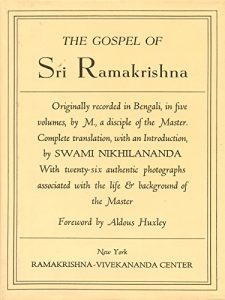
The following short excerpt and quotes on the story of the weaver and the will of God (or will of Rāma) come from The Gospel of Sri Ramakrishna:
The Weaver & The Will of God (Ramakrishna Short Story)
The Story of the Weaver:
“In a certain village there lived a weaver. He was a very pious soul. Everyone trusted him and loved him. He used to sell his goods in the market-place. When a customer asked him the price of a piece of cloth, the weaver would say: ‘By the will of Rāma the price of the yarn is one rupee and the labour four ānnās; by the will of Rāma the profit is two ānnās. The price of the cloth, by the will of Rāma, is one rupee and six ānnās.’ Such was the people’s faith in the weaver that the customer would at once pay the price and take the cloth. The weaver was a real devotee of God. After finishing his supper in the evening, he would spend long hours in the worship hall meditating on God and chanting His name and glories.”
“Now, late one night the weaver couldn’t get to sleep. He was sitting in the worship hall, smoking now and then, when a band of robbers happened to pass that way. They wanted a man to carry their goods and said to the weaver, ‘Come with us.’ So saying, they led him off by the hand. After committing a robbery in a house, they put a load of things on the weaver’s head, commanding him to carry them. Suddenly the police arrived and the robbers ran away. But the weaver, with his load, was arrested. He was kept in the lock-up for the night. Next day he was brought before the magistrate for trial. The villagers learnt what had happened and came to court. They said to the magistrate, ‘Your Honour, this man could never commit a robbery.’ Thereupon the magistrate asked the weaver to make his statement.”
“The weaver said: ‘Your Honour, by the will of Rāma I finished my meal at night. Then by the will of Rāma I was sitting in the worship hall. It was quite late at night by the will of Rāma. By the will of Rāma I had been thinking of God and chanting His name and glories, when by the will of Rāma a band of robbers passed that way. By the will of Rāma they dragged me with them; by the will of Rāma they committed a robbery in a house; and by the will of Rāma they put a load on my head. Just then, by the will of Rāma the police arrived, and by the will of Rāma I was arrested. Then by the will of Rāma the police kept me in the lock-up for the night, and this morning by the will of Rāma I have been brought before Your Honour.’ The magistrate realized that the weaver was a pious man and ordered his release. On his way home the weaver said to his friends, ‘By the will of Rāma I have been released.'”
“As the weaver said in the story: ‘The robbery was committed by the will of Rāma, I was arrested by the police by the will of Rāma, and again, by the will of Rāma, I was set free.’”
Morals of the Story:
“One should be aware that everything happens by the will of Rāma.”
“God impels the thief to go and steal, and at the same time warns the householder against the thief. He does everything.”
“Everything depends on the will of God. The world is His play. He has created all these different things—great and small, strong and weak, good and bad, virtuous and vicious. This is all His māyā, His sport.”
“God has put you in the world. What can you do about it? Resign everything to Him. Surrender yourself at His feet. Then there will be no more confusion. Then you will realize that it is God who does everything. All depends on ‘the will of Rāma.'”
“God alone is the Doer. Everything happens by His will … A man becomes liberated even in this life when he knows that God is the Doer of all things … Not even a leaf moves except by the will of God. Where is man’s free will? All are under the will of God.”
You May Also Enjoy: